Packaging boxes can be divided into paper boxes, color boxes and gift boxes according to the use, process and material.Although they are all used for product packaging, they have significant differences in design goals, fabrication complexity and market positioning. Understanding these differences helps enterprises make reasonable choices of packaging solutions and balance costs, functions and brand image.
?
I. Paper Box
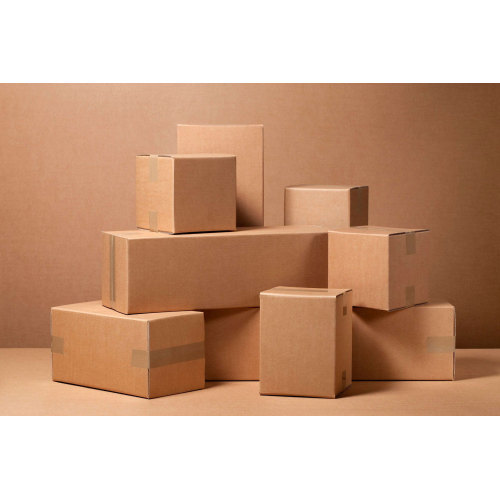
Paper boxes are usually made of relatively simple types of paper, such as corrugated cardboard or cardstock. These materials have certain strength and durability and are suitable for packaging ordinary goods.The printing method is relatively simple, usually monochrome or two-color printing, and the color is relatively single, which mainly meets the basic needs of identification and information transmission. Paper boxes pay more attention to the protective function of goods and are usually used for the packaging of some more common goods to improve the convenience of transportation and use of goods. In addition, paper boxes can also be used for storage and transportation, such as packing goods and keeping documents and archives.The price is relatively low because the materials and processing technology are relatively simple and can be produced in large quantities. The paper box has good environmental performance, is easy to recycle and reuse, and meets the requirements of sustainable development.
?
- Features: Simple structure, moderate strength, mostly made of corrugated cardboard, emphasizing buffering and load-bearing performance.
- Common types: Express delivery cartons, document boxes, industrial parts turnover boxes.
- Advantages: Low price, easy to mass production, environmental protection can be recycled.
- Limitations: Monotone appearance, not suitable for direct consumer sales.
?
Application fields
?
II. Color Boxes
The color boxes are made of relatively high-grade cardboard materials, which have better quality and thickness, and can provide better protection and display effects.The printing process is more complex, focusing on color matching and visual effects, often using four-color printing, bronzing, concave and convex printing and other advanced technology, so that the
color box has a more exquisite appearance and strong visual impact.Color box is mainly used in the packaging of some high-end consumer goods, such as electronic products, cosmetics, health care products, etc., with excellent display appearance effect, can attract the attention of consumers, play a role in promotion and brand promotion.Due to the use of high-grade cardboard, exquisite printing and production process, the cost is relatively high, so the price is also more expensive.Although the environmental protection of color box may vary due to different materials and printing processes, modern color box printing technology is also constantly pursuing environmental protection and sustainability, such as the use of water-based ink, reducing waste in the printing process, etc.
?
- Features: High quality cardboard, fine printing, rich color, often used in product retail packaging.
- Process highlights: Supports high-precision printing (over 175 lines), lamination, partial UV coating, hot stamping, etc. to enhance the texture.
- Structural design: It includes window openings, inner supports, and folding structures, which facilitate display and presentation. The display area usually accounts for more than 60%.
?
Application fields
?
Gift boxes are mainly used for holding gifts, such as packaging boxes, gift boxes, etc. Gift boxes pay great attention to the aesthetic appearance and often feature exquisite packaging and decoration, such as ribbons and flowers. Gift boxes are mainly used for packaging and delivering gifts to enhance the sense of ceremony and solemnity of the gifts.The material selection, production and accessories of the gift box are more exquisite, the cost is relatively higher than other packaging, suitable as a high-end gift box with high value and price. For instance, wooden gift boxes are typically made of raw wood, solid wood, fiberboard, etc. Iron boxes are often used for tea gift packaging. Leather boxes are generally made of genuine leather, recycled leather, artificial leather, synthetic leather, etc.
?
- Features: It lies between the inner packaging and the outer box, combining beauty and a sense of ceremony, and is often given as a gift.
- Design elements: Ribbons, handles, magnetic clasps, inner lining of sponge/velvet, multi-layer structure, etc.
- Material combination: In addition to high-end cardboard, it may also be combined with composite materials such as wood, leather, and acrylic.
?
Application fields
?
IV. How to Choose the Right Packaging Type?
If your needs are
large-scale logistics transportation or warehouse management, you should give priority to the choice of
paper boxes, especially
honeycomb cardboard or corrugated cardboard boxes, with good cushioning and economy.
?
If the goal is to increase the attractiveness of the product at the retail end, it is recommended to use color boxes to enhance the desire of consumers through high precision printing and special processes.
?
If it is used for holiday gifts or high-end brand expression, it is recommended to design exquisite gift boxes, which can not only convey emotions, but also strengthen the brand image and user memory.
?
?
Paper boxes, color boxes and gift boxes correspond to three major levels of packaging demand: functional, commercial and emotional.When choosing, enterprises should consider product positioning, target market and budget, rationally configure packaging strategies, and achieve multiple goals of protection, dissemination and value promotion.



 Guangdong Shiteng Wisdom Technology Co., Ltd.


